
Guide
Blackjack Card Values: What Every Aussie Player Should Know
Blackjack card values explained: 2-10 at face value, J, Q, K worth 10, Ace 1 or 11. Charts, bust odds, dealer upcard maths, basic strategy and Hi-Lo values.
 By John BrokowskiFact-checked by Grace WhitlockUpdated 27 min read

In blackjack, number cards 2 to 10 are worth their face value, the Jack, Queen and King are worth 10 each, and an Ace is worth 1 or 11, whichever helps your hand more. Suits never matter. Your hand total is simply the sum of those values, and the aim is to finish closer to 21 than the dealer without going over.
That is the whole scoring system. The rest of this guide shows how those values play out at the table: when an Ace flips from 11 to 1, what makes a hand “soft” or “hard”, how often each card turns up, and why your total drives every hit, stand, double and split decision. We also cover the probabilities behind the values, full basic strategy charts, the variants that change the deck, and the card counting values players talk about. For the full rules of the game, see our online blackjack guide for Australians.
Blackjack Card Value Chart
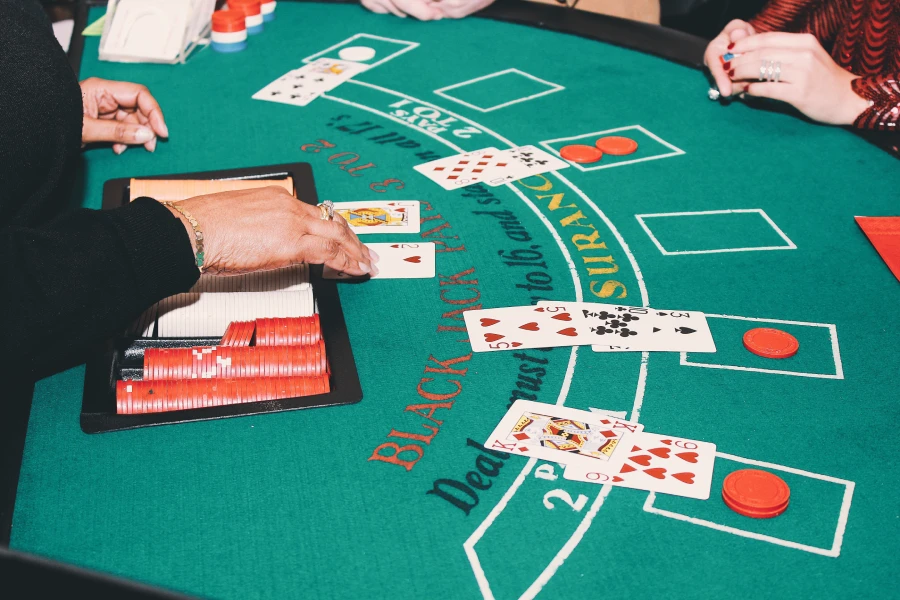
Every card in a standard 52-card deck has a fixed value except the Ace. Most casino games use between one and eight decks shuffled together, but the values below never change with the number of decks.
How to Read the Values (Quick Guide)
| Card | Value in blackjack | Example |
|---|---|---|
| 2 to 10 | Face value | 7 = 7 points, 10 = 10 points |
| Jack, Queen, King | 10 points each | King + 7 = 17 |
| Ace | 1 or 11 points (flexible) | Ace + 6 = 7 or 17 |
Players often call these the “21 card values” because every total is measured against 21. Since four different ranks are worth 10 (10, J, Q, K), there are 16 ten-value cards in each 52-card deck. That is close to one card in three, which is why so many hands land on 12 to 21 and why the dealer’s face-up card matters so much.
Full Rank-by-Rank Chart
The table below lists all 13 ranks, how many of each sit in a single deck and in a six-deck shoe (a common size for casino and live-dealer tables), and the chance that any one card dealt from a full shoe is that value.
| Rank | Blackjack value | Cards per deck | Cards in a 6-deck shoe | Chance per card |
|---|---|---|---|---|
| Ace | 1 or 11 | 4 | 24 | 4/52 = 7.7% |
| 2 | 2 | 4 | 24 | 7.7% |
| 3 | 3 | 4 | 24 | 7.7% |
| 4 | 4 | 4 | 24 | 7.7% |
| 5 | 5 | 4 | 24 | 7.7% |
| 6 | 6 | 4 | 24 | 7.7% |
| 7 | 7 | 4 | 24 | 7.7% |
| 8 | 8 | 4 | 24 | 7.7% |
| 9 | 9 | 4 | 24 | 7.7% |
| 10, Jack, Queen, King | 10 | 16 (4 of each) | 96 | 16/52 = 30.8% |
Read the last column carefully. Any single non-ten rank turns up about 7.7% of the time, yet a ten-value card turns up 30.8% of the time, four times as often. Almost every strategy rule in blackjack traces back to that imbalance.
Why Knowing Card Values Matters
Every decision you make depends on your total. You hit, stand, double down or split based on what your cards add up to and what the dealer is showing. Get the total wrong and even a good strategy falls apart.
Counting the cards correctly is not hard. Where newer players slip up is the Ace: treating it as 11 when that busts the hand, or forgetting that a hand with an Ace counted as 11 can take another card safely. Once you can read a hand at a glance, the game becomes far less stressful. If blackjack is your first table game, our list of the easiest games for Australian gambling newbies explains why it is a good place to start.
How Card Values Work in Blackjack
Number Cards (2 to 10)
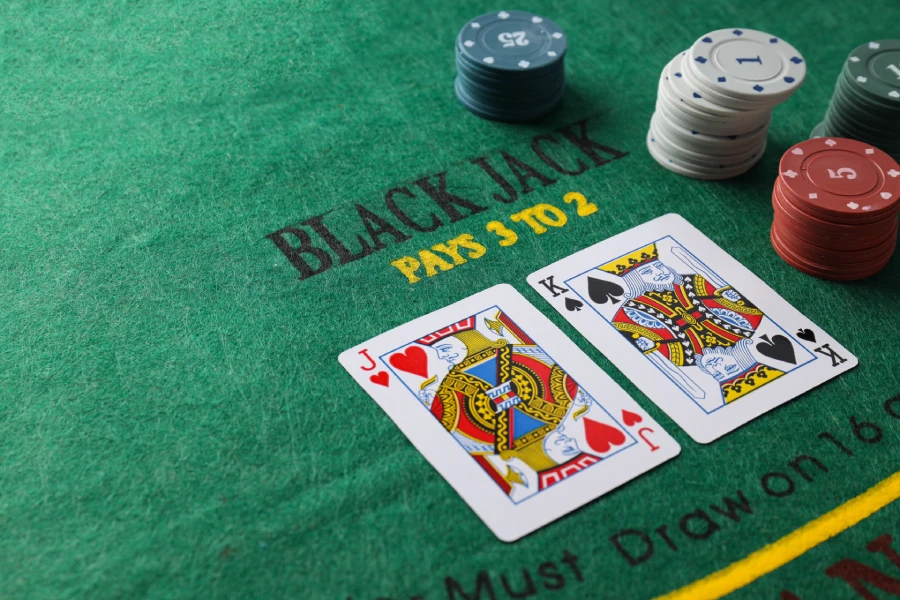
These count exactly as printed. A 4 is worth 4 points, a 9 is worth 9 points, and a 10 is worth 10. Hold a 6 and an 8 and your hand is 14. There is no variation between games or casinos.
Face Cards (Jack, Queen, King)
All three face cards are worth 10. A King and a 7 make 17, a Queen and a Jack make 20. Because face cards and tens share the same value, players usually lump them together as “ten-value cards” when thinking about strategy.
The Ace: 1 or 11?
The Ace is the only card whose value moves. It counts as 11 unless that would push your total past 21, in which case it counts as 1. You never have to declare which value you are using; the hand is scored in whichever way keeps it alive and highest.
- Ace + 6 = 17 (the Ace counts as 11). This is called a soft 17.
- Draw an 8 to that hand and the Ace drops to 1: Ace + 6 + 8 = 15, not a bust.
- Two Aces together count as 12 (11 + 1), never 22.
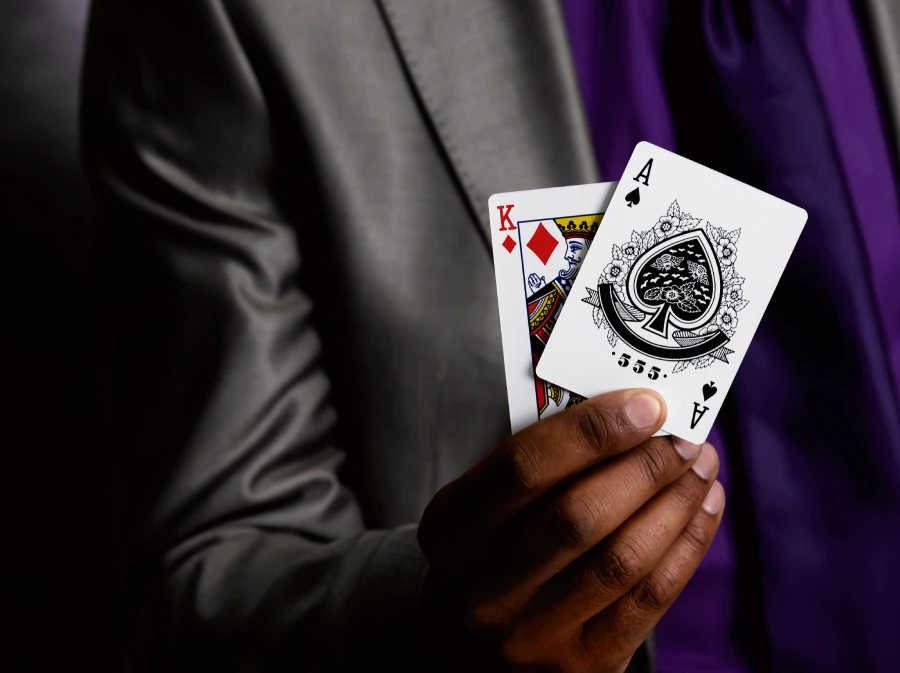
An Ace plus any ten-value card as your first two cards is a “blackjack” (a natural). It beats any other 21 and traditionally pays 3 to 2. Some tables pay only 6 to 5 on a natural, which raises the house edge noticeably, so check the payout printed on the table or in the game rules before you sit down.
Worked Examples: Watching the Ace Switch
Following a few hands card by card is the fastest way to make the Ace’s behaviour automatic.
Hand 1: Ace, 4, 9. After two cards you hold Ace + 4, a soft 15 (11 + 4). You hit and draw a 9. Counting the Ace as 11 would give 24, a bust, so it quietly becomes 1 and the hand is a hard 14 (1 + 4 + 9). Nothing was lost by hitting; the soft hand gave you a free draw.
Hand 2: Ace, 2, Ace, 5. Ace + 2 starts as soft 13. A second Ace arrives: only one Ace can ever count as 11 without busting, so the total is 11 + 1 + 2 = soft 14. Add a 5 and you reach soft 19, a standing hand against every dealer upcard.
Hand 3: 5, Ace, 10. The 5 and Ace make soft 16. Drawing a King would give 26 with the Ace as 11, so the Ace becomes 1 and you have a hard 16. From here you are back in the riskiest zone of the game.
Hand 4: Ace, Ace, Ace, Ace, 7. Rare, but it shows the rule cleanly. One Ace counts 11, the other three count 1 each, giving 14, and the 7 lifts it to 21. That is a five-card 21, not a blackjack, because a blackjack needs exactly two cards.
Notice the pattern in each case. You never choose the Ace’s value; the hand always takes the highest total that does not exceed 21. Online games and live-dealer interfaces show this automatically, often as “7/17” while the hand is still soft.
Soft vs Hard Hands in Blackjack
Two hands with the same total can play very differently. A soft hand contains an Ace currently counted as 11. Hands with no Ace, or with an Ace forced down to 1 to stay at 21 or under, are called hard.
The difference is risk. No single card can bust a soft hand, because the Ace can always drop to 1. By contrast, a hard 12 to 16 busts on any card that pushes it past 21.
Soft vs Hard Hand Comparison
| Hand | Type | Total | Why it matters |
|---|---|---|---|
| Ace + 6 | Soft | 17 | Taking a card cannot bust you; basic strategy says hit or double, never stand |
| 10 + 7 | Hard | 17 | Any card above a 4 busts you, so you stand |
| Ace + 5 + 2 | Soft | 18 | Still flexible; against a dealer 9, 10 or Ace, basic strategy says hit |
| 9 + 8 | Hard | 17 | No flexibility, so you stand |
| Ace + King | Soft | 21 | A natural blackjack, the best possible hand |
How to Calculate Your Hand Total
Most of the time it is simple addition. When an Ace is involved, use this order:
- Add the number cards and face cards together.
- Count one Ace as 11 if that keeps the total at 21 or less. Any extra Aces count as 1.
- If the total goes over 21, count that Ace as 1 instead.
- Note whether the result is soft (an Ace still counted as 11) or hard.
The method works whether you hold two cards or six. Online games display your total for you, but knowing how it was reached helps you understand why the strategy chart recommends a particular move.
Examples of Common Hand Values
| Cards in hand | Calculation | Hand total | Soft or hard |
|---|---|---|---|
| 9 + 7 | 9 + 7 = 16 | 16 | Hard |
| Ace + 6 | 11 + 6 = 17 | 17 | Soft |
| King + 5 | 10 + 5 = 15 | 15 | Hard |
| Ace + 8 + 9 | 11 + 8 + 9 = 28, so the Ace counts as 1 | 18 | Hard |
| Ace + 3 + 5 | 11 + 3 + 5 = 19 | 19 | Soft |
| Ace + Ace + 9 | 11 + 1 + 9 = 21 | 21 | Soft |
| 10 + Ace | 10 + 11 = 21 | 21 | Soft (blackjack) |
Card Value Probabilities: The Maths Behind 21
Because the values are fixed, the odds of the most common situations can be worked out exactly. We calculated the figures below ourselves from the card counts in the chart above, and checked the headline numbers against the published tables at Wizard of Odds, the long-running blackjack maths site run by actuary Michael Shackleford.
How Often You Are Dealt a Natural Blackjack
A natural needs one Ace and one ten-value card in either order. In a single deck that is (4/52 × 16/51) + (16/52 × 4/51) = 128/2,652, or about 4.83%. In a six-deck shoe with 24 Aces, 96 ten-value cards and 312 cards in total, the chance is 2 × 24 × 96 ÷ (312 × 311) = about 4.75%. Eight decks give about 4.75% as well, so on a typical shoe game you can expect a natural roughly once every 21 hands.
| Decks in play | Chance of a natural on your first two cards | Roughly one in |
|---|---|---|
| 1 | 4.83% | 21 hands |
| 2 | 4.78% | 21 hands |
| 6 | 4.75% | 21 hands |
| 8 | 4.75% | 21 hands |
The small drop with more decks happens because, once you hold an Ace, a single deck has proportionally more ten-value cards left (16 of 51) than a large shoe does (96 of 311).
What Your First Two Cards Usually Look Like
Using the same six-deck shoe, here is how often each type of starting hand appears, calculated by counting every ordered two-card combination (97,032 in total). Figures are rounded, and the categories together cover every possible starting hand.
| Starting hand | Chance (6 decks) |
|---|---|
| Hard 12 to 16 (“stiff” hands) | 38.5% |
| Hard 17 to 19 | 16.0% |
| Soft hand (Ace + 2 to 9) | 9.5% |
| Hard 20 (two ten-value cards) | 9.4% |
| Hard 8 or less | 8.8% |
| Natural blackjack | 4.75% |
| Hard 11 | 4.75% |
| Hard 10 | 4.1% |
| Hard 9 | 3.6% |
| Pair of Aces | 0.6% |
Two results stand out. More than a third of your hands start as a stiff 12 to 16, which is why those totals feel so common and so frustrating. And a hard 11 turns up exactly as often as a blackjack in a six-deck game, because both need 4,608 of the 97,032 ordered two-card combinations. Any pair (including Aces and mixed ten-value pairs such as K-K) appears about 14.5% of the time.
Bust Probability by Hard Total
If you hit a hard total, the chance of busting depends only on how many card ranks would take you past 21. The simplest way to estimate it treats each of the 13 ranks as equally likely to come next (the “infinite deck” approximation, which sits within a fraction of a percent of a real six- or eight-deck shoe).
Take hard 12. A 10, Jack, Queen or King busts it, while an Ace through 9 does not. That is 4 bad ranks out of 13, so 4 ÷ 13 = 30.8%. Hard 13 adds the 9 to the bad list: 5 ÷ 13 = 38.5%. Each extra point on your total adds one more busting rank.
| Your hard total | Cards that bust you | Bust chance if you take one card |
|---|---|---|
| 11 or less | None | 0% |
| 12 | 10, J, Q, K | 4/13 = 30.8% |
| 13 | 9 and any ten-value card | 5/13 = 38.5% |
| 14 | 8 or higher | 6/13 = 46.2% |
| 15 | 7 or higher | 7/13 = 53.8% |
| 16 | 6 or higher | 8/13 = 61.5% |
| 17 | 5 or higher | 9/13 = 69.2% |
| 18 | 4 or higher | 10/13 = 76.9% |
| 19 | 3 or higher | 11/13 = 84.6% |
| 20 | Anything but an Ace | 12/13 = 92.3% |
Hard 12 is the hinge. Below it you cannot bust, and from 15 upwards a hit busts you more often than not. Yet basic strategy still says to hit 15 and 16 against a dealer 7 or higher, because standing on a stiff total against a strong upcard loses even more often. The dealer upcard data below explains that trade-off.
Dealer Upcard Bust Probabilities
The dealer has no choices: in most games they must hit 16 or less and stand on 17 or more. Because of that fixed routine, the dealer’s visible card predicts how often they will bust. Wizard of Odds publishes the full outcome tables; the figures here are for a six-deck shoe, measured before any peek for blackjack (so the 10 and Ace rows include the dealer’s chance of a natural, as in no-hole-card games).
| Dealer upcard | Bust chance, dealer stands on soft 17 | Bust chance, dealer hits soft 17 |
|---|---|---|
| 2 | 35.4% | 35.7% |
| 3 | 37.4% | 37.7% |
| 4 | 39.6% | 39.8% |
| 5 | 41.8% | 42.0% |
| 6 | 42.3% | 43.9% |
| 7 | 26.2% | 26.2% |
| 8 | 24.4% | 24.4% |
| 9 | 22.9% | 22.9% |
| 10, J, Q, K | 21.2% | 21.2% |
| Ace | 11.5% | 13.9% |
| All upcards combined | 28.2% | 28.6% |
Source: Wizard of Odds, Blackjack Appendix 2b, six decks.
A dealer showing 4, 5 or 6 busts around 40% of the time, which is why basic strategy lets you stand on a stiff 13 to 16 against those cards and lets the dealer take the risk. Against a 7 or higher the bust rate falls to roughly a quarter, so standing on 16 mostly hands the dealer the win. With an Ace up, the hidden card is a ten-value card 96 times in 311 in a fresh six-deck shoe, so that dealer already holds blackjack 30.9% of the time (Wizard of Odds lists 30.87%) and busts only 11.5% of the time, making the Ace the strongest upcard by a distance. When the upcard is a ten-value card, the hidden card is an Ace 24 times in 311, a 7.7% chance of dealer blackjack. These conditional figures are different from the 4.75% chance that any dealer hand is a natural before you see the upcard.
The soft 17 rule only changes rows where the dealer can reach soft 17, which is why the 7 to 10 rows are identical. Hitting soft 17 gives the dealer another chance to improve, and Wizard of Odds puts the cost to the player at 0.22% in house edge.
Why Card Values Matter for Strategy
Basic strategy is a chart of the mathematically best play for every combination of your total and the dealer’s upcard. It was worked out by computer simulation, and following it brings the house edge in a standard six- or eight-deck game down to roughly 0.5% to 1%, depending on the table rules. Playing on hunches usually costs several times that.
A few patterns show how totals drive the decision:
- A hard 11 is one of the best doubling hands, because so many cards are worth 10.
- Hard 16 against a dealer 10 is the classic bad spot: you lose more often than you win whatever you do, and the chart simply picks the least bad option.
- Soft 18 looks strong but is often a hit against a dealer 9, 10 or Ace.
Card values are not card counting. Counting means tracking the ratio of high to low cards left in the shoe. It does not work in standard online RNG blackjack, because the virtual deck is reshuffled for every hand. Live-dealer streams usually deal from deep multi-deck shoes with early reshuffles, which makes counting impractical. Land-based casinos may refuse service to players they suspect of counting.
Quick Tips Based on Hand Value
- Always split Aces and 8s.
- Never split 5s or 10s; a pair of 5s is a hard 10, and two ten-value cards already make 20.
- Hit (or double where allowed) on soft 17; stand on hard 17 and above.
- Double down on 10 or 11 when the dealer shows a lower card.
- With 12 to 16, hit when the dealer shows 7 or higher.
These shortcuts cover the most common hands. The full chart changes slightly with rules such as whether the dealer hits soft 17, how many decks are used and whether you can double after splitting.
Basic Strategy Charts (4 to 8 Decks, Dealer Stands on Soft 17)
The charts below follow the four-to-eight-deck strategy published by Wizard of Odds for this rule set: the dealer stands on soft 17 and peeks for blackjack, you may double on any first two cards, doubling after a split is allowed, and surrender is not offered. Find your hand in the left column and the dealer’s upcard along the top.
Key: H = hit, S = stand, D = double if allowed, otherwise hit, Ds = double if allowed, otherwise stand, P = split.
Hard Totals
| Your hard total | 2 | 3 | 4 | 5 | 6 | 7 | 8 | 9 | 10 | A |
|---|---|---|---|---|---|---|---|---|---|---|
| 8 or less | H | H | H | H | H | H | H | H | H | H |
| 9 | H | D | D | D | D | H | H | H | H | H |
| 10 | D | D | D | D | D | D | D | D | H | H |
| 11 | D | D | D | D | D | D | D | D | D | H |
| 12 | H | H | S | S | S | H | H | H | H | H |
| 13 | S | S | S | S | S | H | H | H | H | H |
| 14 | S | S | S | S | S | H | H | H | H | H |
| 15 | S | S | S | S | S | H | H | H | H | H |
| 16 | S | S | S | S | S | H | H | H | H | H |
| 17 or more | S | S | S | S | S | S | S | S | S | S |
Soft Totals
| Your soft hand | 2 | 3 | 4 | 5 | 6 | 7 | 8 | 9 | 10 | A |
|---|---|---|---|---|---|---|---|---|---|---|
| A,2 (soft 13) | H | H | H | D | D | H | H | H | H | H |
| A,3 (soft 14) | H | H | H | D | D | H | H | H | H | H |
| A,4 (soft 15) | H | H | D | D | D | H | H | H | H | H |
| A,5 (soft 16) | H | H | D | D | D | H | H | H | H | H |
| A,6 (soft 17) | H | D | D | D | D | H | H | H | H | H |
| A,7 (soft 18) | S | Ds | Ds | Ds | Ds | S | S | H | H | H |
| A,8 (soft 19) | S | S | S | S | S | S | S | S | S | S |
| A,9 (soft 20) | S | S | S | S | S | S | S | S | S | S |
Pairs
| Your pair | 2 | 3 | 4 | 5 | 6 | 7 | 8 | 9 | 10 | A |
|---|---|---|---|---|---|---|---|---|---|---|
| A,A | P | P | P | P | P | P | P | P | P | P |
| 10,10 (any two ten-value cards) | S | S | S | S | S | S | S | S | S | S |
| 9,9 | P | P | P | P | P | S | P | P | S | S |
| 8,8 | P | P | P | P | P | P | P | P | P | P |
| 7,7 | P | P | P | P | P | P | H | H | H | H |
| 6,6 | P | P | P | P | P | H | H | H | H | H |
| 5,5 | D | D | D | D | D | D | D | D | H | H |
| 4,4 | H | H | H | P | P | H | H | H | H | H |
| 3,3 | P | P | P | P | P | P | H | H | H | H |
| 2,2 | P | P | P | P | P | P | H | H | H | H |
Work from the top: check whether your hand is a pair you should split, then whether it is soft, then use the hard chart. A pair of 5s is always played as a hard 10, and a pair of ten-value cards is simply a hard 20.
If the dealer hits soft 17, Wizard of Odds lists a small number of changes for these shoes, including doubling 11 against an Ace, doubling soft 18 against a 2 and doubling soft 19 against a 6. Its own advice is that the stand-on-soft-17 chart will be fine under any set of rules, so learn this one first.
What Changes at Australian Casino Tables
Blackjack in Australian casinos is dealt without a hole card: the dealer takes a second card only after every player has finished. Wizard of Odds’ Australian blackjack page, based on the author’s 2008 visit, lists four ways local venues have settled bets when the dealer then makes blackjack:
- OBO (original bets only): you lose only your first stake, which plays mathematically like a peek game.
- ENHC (European no hole card): you lose everything on the table, including doubles and splits.
- BB+1 (busted bets plus one): you lose any busted hands plus one more unit.
- OBBO (original and busted bets only): you lose busted hands plus one unit from each unbusted hand.
The same page notes that doubling was restricted to totals of 9 to 11 across Australia, doubling after a split was allowed and surrender was not. If you can only double on 9 to 11, every D in the soft chart becomes a hit and the Ds on soft 18 becomes a stand. The page also records that Crown Melbourne moved to hitting soft 17 after that visit. Rules differ by venue and can change, so read the table placard or ask the dealer before you play, and use a no-hole-card chart if your table takes all bets on a dealer blackjack.
How Card Values Drive Doubling and Splitting
Every double and split in the charts comes back to the 30.8% chance of drawing a ten-value card.
Why 10 and 11 Are Doubling Hands
Doubling gives you exactly one more card for twice the stake. On a hard 11, a ten-value card makes 21, a 9 makes 20 and an 8 makes 19. Those draws cover 6 of the 13 ranks, about 46%, and you cannot bust. Only the Ace (hard 12) and the small cards leave you with a weak total. A hard 10 is almost as good. A hard 9 is weaker, so the chart doubles it only against the dealer’s bust cards, 3 to 6.
Why You Split 8s and Aces
A pair of 8s is a hard 16, the worst total in the game. Splitting turns it into two hands starting on 8, each of which can improve to 18 with a ten-value card. Aces work the same way in reverse: a pair of Aces is a clumsy soft 12, but two hands each starting on 11 are strong. Most casinos deal only one card to each split Ace, and an Ace plus a ten-value card after a split counts as 21, not as a blackjack paying 3 to 2.
Why You Never Split 10s or 5s
Two ten-value cards already make 20, a hand that wins most of the time. Breaking it up to chase two hands starting on 10 throws that edge away. Two 5s make a hard 10, one of the best doubling totals, while a single 5 is a poor starting card. In both cases the pair is worth more as a single hand.
Why 9s Stand Against a 7
A pair of 9s is 18. Against a dealer 7, the most likely dealer result is 17, so 18 is already ahead and the chart stands. When the dealer shows an 8 or 9, they are likely to finish on 18 or 19, so splitting into two hands starting on 9 does better.
Why Insurance Is Usually a Bad Bet
Insurance pays 2 to 1 if the dealer’s Ace turns out to have a ten-value card underneath. For the bet to break even, at least one card in three (33.3%) of the unseen cards must be worth 10. Wizard of Odds puts the actual share at 30.87% in a six-deck game with an Ace showing, so insurance loses money over time unless you know the remaining shoe is unusually rich in tens.
3:2 vs 6:5: What the Blackjack Payout Does to Your Odds
Card values decide how often you get a natural; the table decides what it pays. On a $20 bet, a 3:2 table pays $30 for a blackjack and a 6:5 table pays $24.
That $6 gap sounds small, but naturals are frequent. With about 4.75 blackjacks per 100 hands in a six-deck shoe, and a small share of those pushing against a dealer blackjack, a player betting $10 a hand gives up roughly $13 to $14 per 100 hands at a 6:5 table. That is about 1.4% of the money wagered. Wizard of Odds puts the exact effect at 1.39% added to the house edge, more than doubling it in a typical shoe game. Some tables go further still and pay blackjacks at even money, which Wizard of Odds values at 2.27%.
| Blackjack payout | Win on a $10 natural | Effect on player return (Wizard of Odds) |
|---|---|---|
| 2 to 1 | $20 | +2.27% |
| 3 to 2 (standard) | $15 | Baseline |
| 7 to 5 | $14 | -0.45% |
| 6 to 5 | $12 | -1.39% |
| 1 to 1 (even money) | $10 | -2.27% |
Online, the payout is listed in the game’s help or rules screen. If it says 6:5, the cheapest fix is to pick a different table.
Rule Variations and Their Effect on the House Edge
The card values never change, but the rules around them shift the maths. Wizard of Odds measures each rule against a baseline of eight decks, dealer stands on soft 17, doubling on any first two cards, doubling after split allowed and splitting to four hands. A positive number helps the player; a negative number helps the house.
| Rule | Effect on player return |
|---|---|
| Single deck instead of eight | +0.48% |
| Double deck | +0.19% |
| Player may draw to split Aces | +0.19% |
| Player may resplit Aces | +0.08% |
| Late surrender against a ten | +0.07% |
| Four decks | +0.06% |
| Six decks | +0.02% |
| European no hole card (lose all bets to a dealer blackjack) | -0.11% |
| Player may not double after splitting | -0.14% |
| Player may double on 10 and 11 only | -0.18% |
| Dealer hits soft 17 | -0.22% |
| Blackjack pays 6 to 5 | -1.39% |
Source: Wizard of Odds, Blackjack Rule Variations. Effects of several rules combined are close to, but not exactly, the sum of the individual figures.
Fewer decks help the player because each card dealt changes the remaining mix more, which makes naturals slightly likelier (4.83% in one deck against 4.75% in six). Rules that let you double and split more often help because they let you press the advantage when the ten-value cards are working for you. The single most expensive rule on the list is not about strategy at all: it is the 6:5 payout.
Are Card Values the Same in All Blackjack Variants?
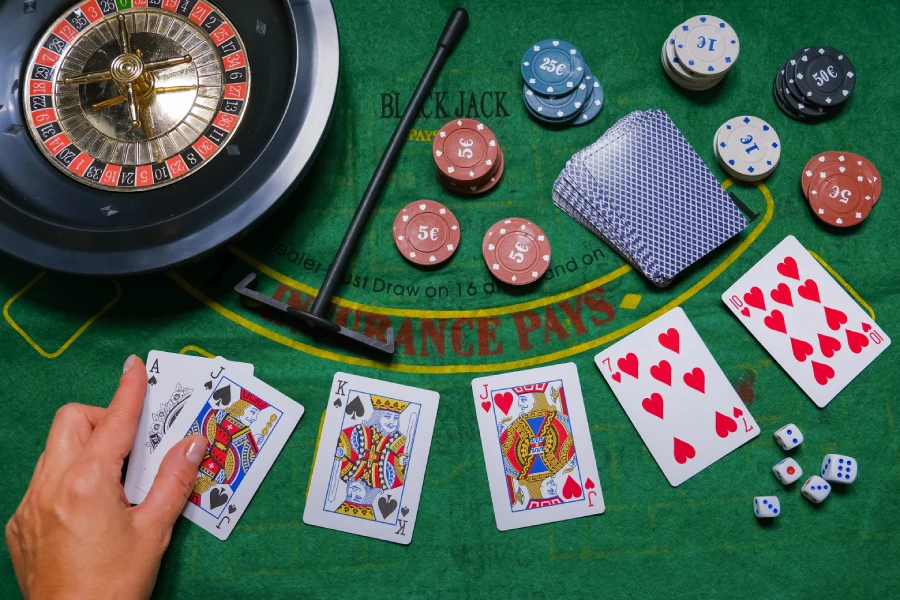
Yes, for every mainstream version. Classic, European, Atlantic City, Vegas Strip and multi-hand blackjack all score cards the same way. What changes is the rule set around them: the number of decks, whether the dealer takes a hole card, whether the dealer hits or stands on soft 17, and when you may double or surrender.
Australian casino blackjack is a good example. Many local tables use the European “no hole card” rule, so the dealer takes a second card only after players have acted. If the dealer then makes blackjack, you can lose the extra money you put out on doubles and splits, which changes when doubling is worthwhile. The card values themselves stay exactly the same.
A handful of variants do change the deck or the payouts in ways that matter:
Spanish 21
Spanish 21 uses six or eight “Spanish” decks of 48 cards: the standard 52 minus the four 10s. Jacks, Queens and Kings remain, still worth 10, so each deck holds 12 ten-value cards instead of 16. Removing tens favours the dealer, so the game compensates with player-friendly rules. Wizard of Odds lists the usual ones as late surrender, doubling on any number of cards, a player 21 always winning, a player blackjack beating a dealer blackjack, and bonus payouts for five-card and longer 21s and for 6-7-8 or 7-7-7 combinations.
Pontoon in Australia
Here is where Aussie players get caught out. According to Wizard of Odds, the game Australian casinos call Pontoon is a form of Spanish 21, with the 10s removed and the bonus payouts that go with it. British Pontoon is something else: a home game descended, like blackjack, from the old vingt-un, with its own names such as “twist” and “stick” and no official rule book. Card values are the same in both, but the deck and payouts are not, so the blackjack charts on this page do not apply to Pontoon.
Blackjack Switch
You play two hands of equal stake and may swap the second card dealt to each, so a 5-10 and a 10-6 can become 11 and 20. The price is steep: a dealer total of 22 pushes against every player hand that has not busted, and blackjacks pay only even money. A two-card 21 created by switching counts as 21, not a blackjack.
Free Bet Blackjack
Created by Geoff Hall, Free Bet Blackjack gives you a “free double” on hard two-card totals of 9, 10 and 11, and a “free split” on every pair except 10s. If a free-bet hand loses, you lose only your original stake. The catch, as in Blackjack Switch, is that a dealer 22 pushes all remaining bets. Wizard of Odds describes the standard rules as six decks, the dealer hitting soft 17 and blackjacks paying 3 to 2.
Double Exposure
Both dealer cards are dealt face up, so you always know the dealer’s total. In exchange, the dealer wins all ties except on a natural, and player blackjacks pay even money. With full information the strategy changes a lot, and Wizard of Odds publishes a separate chart for it.
| Variant | Card values | Deck change | Main trade-off |
|---|---|---|---|
| Classic / European blackjack | Standard | None | Hole-card and soft 17 rules vary |
| Spanish 21 / Australian casino Pontoon | Standard | All four 10s removed per deck | Fewer tens, more player bonuses |
| Blackjack Switch | Standard | None | Swap cards, but dealer 22 pushes and blackjack pays 1:1 |
| Free Bet Blackjack | Standard | None | Free doubles and splits, but dealer 22 pushes |
| Double Exposure | Standard | None | See both dealer cards, but dealer wins ties and blackjack pays 1:1 |
Card Counting Values: How Hi-Lo Works
Card counting assigns a second, separate value to each card. It has nothing to do with your hand total; it tracks whether the cards still to come are rich in tens and Aces (good for the player) or in small cards (good for the dealer). The most widely used system, the Hi-Lo count, was first introduced by Harvey Dubner in 1963, according to Wizard of Odds.
| Cards | Hi-Lo count value | Why |
|---|---|---|
| 2, 3, 4, 5, 6 | +1 | Small cards leaving the shoe make the rest richer in tens and Aces |
| 7, 8, 9 | 0 | Roughly neutral |
| 10, J, Q, K, Ace | -1 | High cards leaving the shoe hurt the player |
Running Count and True Count
Start the running count at zero after a shuffle and adjust it for every card you see. Suppose the first ten cards are 9, 4, Q, 6, A, 2, 5, 10, 3, 7. The 4, 6, 2, 5 and 3 add +5, the Q, A and 10 subtract 3, and the 9 and 7 add nothing, so the running count is +2.
In a multi-deck shoe, a +2 means less with six decks left than with one, so counters convert it to a true count by dividing by the number of decks remaining. A running count of +9 with about three decks left is a true count of +3. The higher the true count, the more a counter bets, and the more often they stand, double or take insurance where basic strategy would not.
Wizard of Odds cautions that counting is hard and that a realistic edge with today’s rules is only about 0.5% to 1.5%, with big swings along the way. It also stresses that counters still play basic strategy on most hands, so the charts above come first.
Is Card Counting Legal in Australia?
Keeping a count in your head is a mental skill, not a device or a marked card. Casinos, however, do not have to let you play. In New South Wales, for example, section 79 of the Casino Control Act 1992 allows the casino operator or the person in charge of the casino to give anyone a written exclusion order barring them from entering or remaining in the casino, and other states have similar powers in their own casino laws. In practice, a suspected counter in an Australian casino is more likely to be asked to stop playing blackjack or to leave than to face anything else.
Online and Live Blackjack: Why Counting Rarely Works
Card values are identical online, but the dealing method decides whether past cards tell you anything about future ones.
- RNG (computer) blackjack: the random number generator effectively shuffles a fresh virtual shoe for every hand, so a count resets to zero each round and has no value.
- Continuous shuffling machines: discards go straight back into the machine, so the shoe never runs down. Wizard of Odds’ simulations found this slightly lowers the house edge against a basic-strategy player (by 0.020% in a six-deck game) compared with dealing to a cut card, but it removes any counting edge.
- Live-dealer studios: most deal from six- or eight-deck shoes and reshuffle well before the end, which keeps the true count close to zero for most of the shoe.
There is also a legal point for Australians. Under the Interactive Gambling Act 2001, it is illegal for companies to provide online casino games, including blackjack, to people in Australia; the offence sits with the operator, not the player. Offshore sites that accept Australians therefore operate outside Australian licensing and consumer protections, which is worth knowing before you deposit anywhere. Our live casino guide explains how streamed tables are run.
A Short History of the 21 Card Values
The scoring system is centuries old. A Spanish dictionary from 1611 mentions a card game called veinte y uno, “twenty-one”, and Miguel de Cervantes described it in his story “Rinconete y Cortadillo”, written around 1601 to 1602. His card-sharp characters explain that the goal is to reach 21 without going over and that the Ace counts as 1 or 11, the same flexible Ace used today.
The game spread to France as vingt-et-un (written vingt-un in Britain), and the first published English rules appeared in 1800. American players picked it up in the early 1800s. The name “blackjack” came later: the popular story of a 10-to-1 bonus for the Ace of spades with a black Jack has been challenged by French card historian Thierry Depaulis, who links the name to prospectors in the Klondike Gold Rush of 1896 to 1899. Britain’s home version became Pontoon around the First World War.
Serious maths arrived in 1956, when Roger Baldwin, Wilbert Cantey, Herbert Maisel and James McDermott published “The Optimum Strategy in Blackjack” in the Journal of the American Statistical Association, the first sound basic strategy. Edward Thorp built on their work in Beat the Dealer in the early 1960s, which brought card counting to a wide audience.
Common Mistakes With Blackjack Card Values
- Counting two Aces as 22 or 2. A pair of Aces is soft 12. Split them whenever the table allows.
- Standing on soft 17. Ace-6 cannot bust on one card, and 17 rarely wins. Hit, or double against a dealer 3 to 6.
- Treating soft 18 as automatic. Against a dealer 9, 10 or Ace, the chart says hit.
- Splitting 10s because they “match”. Two Kings already make 20.
- Calling a split Ace plus a 10 “blackjack”. After a split it is normally just 21 and pays even money.
- Taking insurance on a good hand. Even with 20, insurance is a separate bet with negative expected value for a non-counter.
- Ignoring the payout sign. A 6:5 game costs about 1.39% more than a 3:2 game.
- Assuming Pontoon is blackjack. In Australian casinos it uses a deck without 10s and its own strategy.
Blackjack Card Values Glossary
| Term | Meaning |
|---|---|
| Natural / blackjack | An Ace and a ten-value card as your first two cards; normally pays 3 to 2 |
| Ten-value card | Any 10, Jack, Queen or King |
| Soft hand | A hand with an Ace counted as 11 |
| Hard hand | A hand with no Ace, or with every Ace counted as 1 |
| Stiff | A hard 12 to 16 that can bust with one card |
| Upcard | The dealer’s face-up card |
| Hole card | The dealer’s face-down second card; not dealt in Australian and European games |
| Peek | The dealer checking the hole card for blackjack when showing an Ace or ten |
| Soft 17 rule (S17 / H17) | Whether the dealer must stand (S17) or hit (H17) on Ace-6 and similar soft 17s |
| Double down | Doubling your stake in exchange for exactly one more card |
| Split | Separating a pair into two hands, each with its own stake |
| DAS | Double after split allowed |
| Push | A tie; your stake is returned |
| Bust | Going over 21, which loses immediately |
| Running count | The Hi-Lo tally of cards seen since the shuffle |
| True count | Running count divided by decks remaining |
| Shoe | The box holding several decks shuffled together |
For more table-game terms, plus the local lingo you will hear on the casino floor, see our guide to Australian gambling slang.
Play Responsibly
Perfect card knowledge does not change the fact that blackjack has a house edge. Set a budget before you play, take breaks, and stop when it is no longer fun. If gambling is causing problems for you or someone close to you, free and confidential help is available 24/7 from Gambling Help Online on 1800 858 858. Our responsible gaming page lists more support options.
Final Thoughts on Mastering Blackjack Card Values
Number cards count as printed, picture cards count 10, and the Ace counts 1 or 11. Learn to spot soft and hard totals instantly and you have the foundation for every strategy decision. From there, practising with a basic strategy chart is the best next step; free-play tables let you build the habit without staking anything. Other card games score very differently: our guides to baccarat, where tens and picture cards count zero, and to poker types are useful comparisons, and our blackjack basic strategy charts turn these card values into hit, stand, double and split decisions.
Blackjack Card Values FAQ
What are the values of each card in blackjack?
Number cards 2 to 10 are worth their face value. The Jack, Queen and King are worth 10 each. An Ace is worth 1 or 11, whichever is better for your hand. Suits have no effect.
Is an Ace worth 1 or 11 in blackjack?
Both. It counts as 11 unless that would take your total over 21, in which case it counts as 1. A hand with an Ace counted as 11 is called a soft hand.
What are face cards worth in blackjack?
Jacks, Queens and Kings are each worth 10, exactly like a 10. Together with the 10s they make 16 ten-value cards in every 52-card deck.
What is a soft 17 in blackjack?
A soft 17 is a 17 that includes an Ace counted as 11, such as Ace-6 or Ace-2-4. As a player you should hit it, or double against a dealer 3 to 6 where allowed. For the dealer, the table rules say whether they must stand or hit on soft 17; hitting soft 17 adds about 0.22% to the house edge.
Is a 10 and an Ace always blackjack?
Only as your first two cards on an unsplit hand. An Ace and a ten-value card after splitting Aces normally counts as an ordinary 21, and in Blackjack Switch a 21 made by switching cards is also just 21.
What are the odds of getting blackjack?
About 4.83% in a single deck and about 4.75% in a six- or eight-deck shoe, or roughly once every 21 hands.
Do the number of decks change card values?
No. The values are identical with one deck or eight. More decks slightly reduce your chance of a natural and change a few strategy decisions, which is why charts are labelled by deck count.
Why does the dealer’s upcard matter so much?
Because the dealer follows fixed rules, the upcard predicts their result. According to Wizard of Odds’ six-deck tables, a dealer showing 5 or 6 busts about 42% of the time, while a dealer showing an Ace busts only about 11.5% of the time.
What are the rules to 21 blackjack?
Each player and the dealer get two cards. You add up your card values and choose to hit, stand, double or split, aiming to finish closer to 21 than the dealer without going over. Going over 21 is a bust and loses immediately.
What is the 777 rule in blackjack?
It is not a standard rule. Some tables offer a side bet or bonus that pays extra for three 7s, sometimes more if they are suited. Spanish 21, for example, pays a bonus for 7-7-7. Check that table’s paytable, because side bets usually carry a higher house edge than the main game.
Are Jokers ever used in blackjack?
No. Blackjack uses standard 52-card decks without Jokers, so every card you see runs from 2 to Ace.
What happens if both dealer and player have 21?
It is a push. Neither side wins, and your original bet is returned. A natural blackjack still beats a 21 made with three or more cards.
What card counting values does the Hi-Lo system use?
Cards 2 to 6 count +1, 7 to 9 count 0, and 10s, face cards and Aces count -1. These counting values are separate from the card values you use to total your hand.
Sources
- Wikipedia: Blackjack (rules, history, Baldwin et al. 1956)
- Wikipedia: Twenty-one (card game), Spanish origins and vingt-un
- Wikipedia: Pontoon (card game), British domestic game
- Wizard of Odds: Blackjack basic strategy, 4 to 8 decks
- Wizard of Odds: Blackjack Appendix 2b, dealer outcome probabilities
- Wizard of Odds: Blackjack rule variations
- Wizard of Odds: Australian blackjack
- Wizard of Odds: Spanish 21
- Wizard of Odds: Blackjack Switch
- Wizard of Odds: Free Bet Blackjack
- Wizard of Odds: Double Exposure
- Wizard of Odds: Card counting introduction
- Wizard of Odds: High-Low card counting strategy
- Wizard of Odds: Blackjack Appendix 10, continuous shuffler vs cut card
- Wizard of Odds: Blackjack house edge calculator
- NSW legislation: Casino Control Act 1992, s 79 exclusion orders
- Australian Government (DITRDCSA): Interactive gambling
- Gambling Help Online (Australia)
About the author
John Brokowski
Casino reviews and AU guides
John Brokowski is one of the three Casino Bros host bylines. Since September 2020 his name has appeared on casino reviews and on the Australian payment-method, game and hub pages. Refreshed pages are fact-checked against their listed sources and reviewed by a second byline.