What Does Volatility Mean in Slots? A Simple Guide for Aussie Players

You are at the local, or maybe you are on the couch with your phone. You load up a new pokie from one of your go-to online casinos. You spin. Nothing. You spin again. Dead air. You spin ten more times and your balance is melting faster than a Golden Gaytime in January. Then, out of nowhere, you hit a bonus round and your balance skyrockets. That rollercoaster ride? That is volatility.
Understanding volatility is the secret sauce to picking the right game. It is not about luck. It is about how the game is built. Every pokie has a personality. Some are chill and steady. Others are aggressive and moody. If you do not know which one you are playing, you are going in blind.
This guide breaks down exactly what volatility means for your wallet and your blood pressure. We will look at the math, the myths, and how to spot a volatile beast before you drop a single dollar. Whether you are a casual punter or a high roller, this knowledge is power. Let’s get into it.
Slot Volatility Explained Simply
Volatility is a fancy term for risk. In the finance world, they use it to talk about the stock market. In the pokies world, it measures how often a game pays out and how big those payouts are. Think of it as the rhythm of the game. So, what does volatility mean in slots? It’s the rhythm that decides whether you’re riding a mellow wave or clinging on through a cyclone of spins.
Some games pay out little wins constantly. Others drop one big payout after 100 dry spins, and a lot of that comes down to pokies features and winning mechanics baked into the design. You feel like you are always winning, even if the amounts are small. That is low volatility. Other games go silent for ages. You might think the machine is broken. Then it drops a massive win that covers all your losses and then some. That is high volatility.
It is the difference between a steady salary and working on commission. One is safe and predictable. The other is feast or famine. Neither is “better” in a technical sense. It depends entirely on what kind of thrill you are chasing and how much cash you have to back it up.
Volatility vs RTP: What’s the Real Difference?
This is where things get confusing for a lot of players. You see RTP (Return to Player) and Volatility listed side by side. They sound similar. They are not.
RTP is the “how much.” It is a theoretical number. It tells you that over millions of spins, a machine with 96% RTP will give back $96 for every $100 put in. It is a long-term average. It does not tell you anything about what will happen in the next ten minutes.
Volatility is the “how.” It explains how that 96% is delivered to you.
Imagine two pokies. Both have 96% RTP. Pokie A pays you $1 every spin for 96 spins, then takes $4 for the last four. You end up with $96. That is zero volatility. Pokie B takes your money for 99 spins, then pays you $96 on the 100th spin. You still end up with $96. That is extreme volatility.
RTP is the destination. Volatility is the road trip. One road is a smooth highway. The other is a dirt track full of potholes and beautiful views. Knowing the difference saves you a lot of headache.
Where Does “Variance” Fit In?
You might hear the term “variance” thrown around in forums or by game developers. Do not let it confuse you. Volatility and variance are the same thing.
Variance is the statistical term. Math nerds use it to calculate the spread of numbers from the average. Volatility is the term casinos and players use. If you see a review talking about “high variance,” they mean high volatility. It is simple.
There is no secret third metric. It is all about the swing. It measures the gap between a losing streak and a winning streak. The wider the gap, the higher the variance. The higher the variance, the sweatier your palms get while you wait for that bonus symbol to land.
How Volatility Affects Your Slot Sessions
Volatility dictates the vibe of your session. It changes how you bet. It changes how you feel. It changes how long your money lasts. If you pick the wrong volatility for your mood, you are going to have a bad time. That is why knowing what does volatility mean in slots can be the difference between a good time and a total wallet wipeout.
Understanding the ‘feel’ of each level helps you manage expectations, especially if you’re playing with real money pokies and want to avoid blowing your bankroll. You won’t get frustrated when a high volatility game goes quiet because you know that is part of the deal. You won’t get bored on a low volatility game because you know it is designed to keep you floating.
Low Volatility: Frequent Hits, Lower Payouts
Low volatility slots are the friendly mates of the casino world. They are low risk. They want you to have a good time without stressing you out.
When you play these games, the screen lights up constantly. You get bells, whistles, and winning animations every few spins. It feels great. Your brain gets that little dopamine hit over and over again.
The catch is the size of the wins. Most of your wins will be smaller than your bet or barely cover it. You might bet $1 and win $1.20. You might win $0.80. These are “wins” technically, but your balance stays pretty flat.
These games are perfect for extending your playtime. You can deposit $50 and play for two hours. You probably won’t win a mansion, but you also probably won’t bust out in ten minutes. It is a steady, gentle ride. It is playing for entertainment rather than the adrenaline of a life-changing jackpot.
High Volatility: Dry Runs, Big Wins
High volatility slots are savage. They do not care about your feelings. They are built for the thrill-seekers who want to win big or go home with nothing.
When you load up a high volatility game, prepare for silence. You will spin. You will lose. You will spin again. You will lose again. This is called a “dead spin.” In these games, dead spins are common. Your balance will dip. It can be scary. You watch your money go down and wonder if the game is cold.
Then it happens. You hit the scatter symbols. You unlock the bonus round. Suddenly, the game goes wild. Multipliers stack up. Wilds expand. The payout is massive. A single bonus round on a high volatility game can pay 5,000x or 10,000x your bet.
That is the trade-off. You pay for the chance of a massive win by enduring long losing streaks. It is high risk. If you do not have the bankroll to survive the dry spell, you will bust out before the big win hits. It is exciting, but it is dangerous.
Medium Volatility: Somewhere in the Middle
Medium volatility is the Goldilocks zone. It is not too hot. It is not too cold. It tries to give you the best of both worlds.
These games are the most popular for a reason. You get enough small wins to keep your balance healthy and your interest up. But the developers also bake in the chance for a decent payout. You won’t see the frequent dead spins of a high volatility beast, but you also won’t be stuck with only tiny wins.
The bonus rounds in medium volatility games are usually balanced. They trigger reasonably often. They pay out decent chunks of change. You might win 500x or 1,000x your bet. It is a solid win, even if it isn’t retirement money.
If you are unsure where to start, medium volatility is the safest bet. It gives you a taste of the risk without throwing you in the deep end, a sweet spot often recommended among the easiest games for Aussie gambling newbies. And If you’re still wrapping your head around what does volatility mean in slots, medium games are the easiest intro, a little risk, a little reward, no wild swings.
It is reliable. It is consistent. It is a solid afternoon at the pub.
Which Volatility Is Better for You?
There is no single “best” volatility. It is personal. It depends on your wallet, your patience, and your goals for the day. A game that is perfect for your mate might be a nightmare for you. You need to match the game specs to your own style, just like when you’re choosing pokies that suit your playstyle or pacing.
For Casual Players or Smaller Budgets
If you have $20 or $50 to play with, stay away from high volatility. Seriously. A high volatility game can eat $50 in three minutes if you hit a bad run. You won’t even get a chance to see a bonus round.
If your goal is to stretch $50 into a full arvo, focus on low volatility pokies and other casino games with low house edges that don’t drain your stack too fast. Stick to low volatility games. You want to maximise your playtime. You want to see the reels spin and hear the music. Low volatility ensures your money recycles. You win a bit, you bet a bit. You can stretch a small deposit into a solid hour of fun.
It is also great if you are clearing a bonus wagering requirement. Since the wins are frequent, you can turn over the money without risking a massive drop in your balance. Play smart. Keep it low and slow.
For Risk-Takers and High Rollers
If you have a big bankroll and nerves of steel, high volatility is your playground. You are not here to win $5. You are here to win $5,000.
You need patience. You need to be comfortable watching your balance drop by 20% or 30% without panicking. You know that you are paying for the opportunity to hit that one massive multiplier.
High volatility is for players who chase the “max win.” Games like “Dead or Alive 2” or “Money Train” are legendary for this. They can be brutal, but when they pay, they pay life-changing amounts. If you can afford the downswing, the upswing is glorious.
For Balanced Play with Occasional Thrills
Most of us sit here. We want to have fun, but we also want the chance to win something decent. Medium volatility is the answer.
It is good for a Friday night punt. You deposit $100. You play for a while. You might go up to $150. You might drop to $50. You get a few bonus rounds. It feels fair. You are engaging with the game mechanics without feeling like you are being robbed or bored to tears.
This is the sweet spot for the average Aussie player. It offers entertainment value with a sprinkle of hope.
Comparison Table: Volatility Types at a Glance
Here is a quick breakdown to help you decide.
| Volatility Level | Win Frequency | Win Size | Risk Level | Best For… |
| Low | Very High | Small | Low | Casual play, small budgets, meeting wagering reqs. |
| Medium | Average | Mixed | Medium | Most players, balanced sessions, extended play. |
| High | Low | Massive | High | High rollers, jackpot chasers, big bankrolls. |
How to Tell a Slot’s Volatility Level
The tricky thing is that casinos do not always plaster the volatility rating on the front page. They like to show you the theme and the characters. You often have to dig a little to find the stats. Here is how to play detective.
Clues in the Pay Table
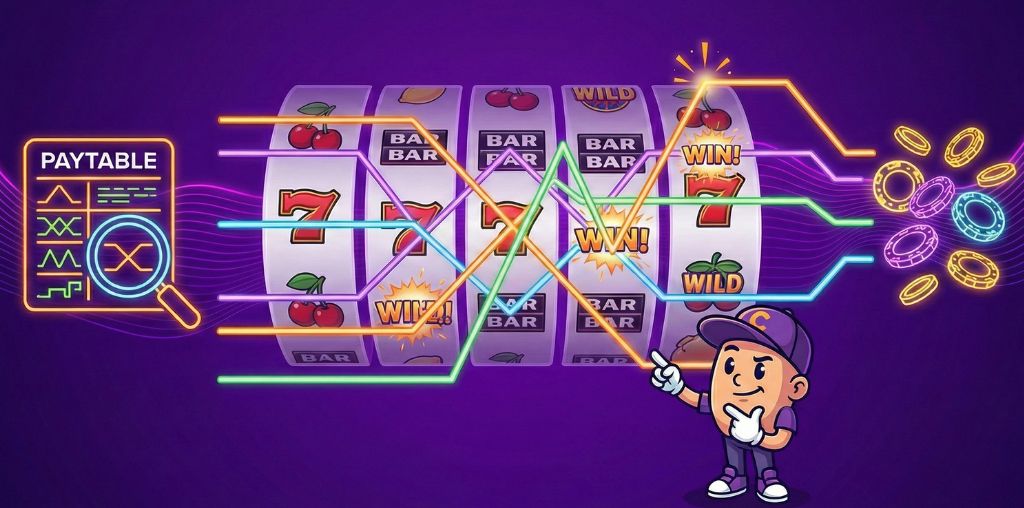
Open the game and go to the info screen. Look at the payout values for the symbols.
In a high volatility game, there is usually a massive gap between the payout for 3 symbols and 5 symbols. For example, 3 Aces might pay 5x your bet, but 5 Aces might pay 100x. That huge jump rewards you heavily for a rare hit.
In a low volatility game, the curve is flatter. 3 symbols might pay 5x, and 5 symbols might pay 10x. The difference is small because the game expects you to hit 5 symbols more often.
Also, look at the max win. If the game boasts a max win of 50,000x your stake, it is almost certainly high volatility. You cannot payout that much money easily without taking a lot of money in first. If the max win is 500x, it is likely low volatility.
Look It Up Online
Google is your best mate here. Type the name of the slot plus “volatility” or “review.” Sites like CasinoBrosAU exist to tell you exactly what the volatility is. Developers like NetEnt or Pragmatic Play also publish “fact sheets” for their games.
Don’t guess. Take ten seconds to check. If you’re keen to understand the maths behind it, suss out tips on how to make slot machines pay before you spin. It saves you from depositing into a game that doesn’t match your style.
Ask the Casino Staff (If You’re on the Floor)
If you are at the local RSL or a physical casino, you can ask the attendants. They often know which machines are “hungry” and which ones are “loose.” They might not use the technical terms, but they know the machines.
Online, you can hit up the live chat support. Ask them, “Is this game high or low variance?” They should be able to tell you. If they can’t, pick a different game.
Quick Checklist: Spotting Slot Volatility
Use this mental checklist before you spin:
- Jackpot Size: Is there a massive progressive jackpot? (Likely High Volatility).
- Max Win: Is the max win over 10,000x? (High Volatility).
- Symbol Payouts: Is there a huge gap between low and high symbol matches? (High Volatility).
- Bonus Features: Are there multiple hard-to-trigger bonus rounds? (High Volatility).
- Frequency: Did you spin 20 times with no win in the demo mode? (High Volatility).
Online vs Physical Machines: Is Volatility Different?
You might wonder if the Aristocrat machine at the pub plays the same as the online version. The answer is usually yes, but with a twist.
The mechanics of volatility—the math behind risk and reward—are the same. A high volatility game is high volatility everywhere. However, the RTP is often lower on physical machines because they have overheads like electricity, staff, and rent.
This lower RTP makes high volatility feel even harsher in a pub. A “dead streak” on a physical machine with 87% RTP feels longer and more brutal than on an online slot with 96% RTP. The money drains faster.
Online casinos also have way more variety. A physical venue might have 50 machines. An online casino has 5,000. This means you can find niche volatility settings online that you just can’t find at the local. You can find “extreme” volatility games online that would be illegal or just unpopular in a pub setting.
Generally, online gives you more control. You can filter by volatility. You can check the stats instantly. At the pub, you get what is given.
Responsible Slot Play and Volatility Choices
We have had a laugh and talked strategy, but let’s end on a serious note. Volatility is math. It is not magic. Knowing a game is high volatility does not mean it is “due” to pay out.
High volatility games can be dangerous if you chase losses. The “dry spells” can trick you into thinking a win is just around the corner. It isn’t. The RNG is random. You could spin for days and never hit that bonus round.
Never bet money you cannot afford to lose. Set a deposit limit before you start. Set a time limit. If you find yourself getting angry at the “dry spell,” log off. And if it feels like you’re losing control, take a break and read up on gambling addiction. There is really no shame in it; heaps of players have been there.
Playing slots should be fun. It should be entertainment. If you are playing to pay rent, you are playing the wrong game. Treat volatility as a guide to choose your entertainment style, not a roadmap to riches. Keep it fun, keep it safe, and look after yourself.
FAQ
-
Is It Better to Bet High or Low Slots?
It depends on your goal. Bet low volatility for longer playtime and steady fun. Bet high volatility for the adrenaline rush and the chance of a huge payout. There is no “better,” only what suits your wallet.
-
Can I Win Big on a Low Volatility Slot?
It is possible, but rare. You won’t hit a multi-million dollar win. You might hit a nice few hundred dollars if you are betting big, but the mechanics cap the top-end payouts to keep the game stable.
-
Do High Volatility Slots Always Pay More?
No. They pay bigger amounts when they hit, but they pay less often. You could easily lose more money on a high volatility slot than you win back. The “potential” is higher, not the guarantee.
-
How Do I Choose the Right Volatility?
Look at your bankroll. If you have a small budget, go low. If you have a big budget, go high. If you want a mix, go medium. Be honest about how much risk you can handle.
-
Are There Volatility Ratings in Every Game?
Most modern online slots list it in the info section. Some older games or physical machines hide it. If it is not listed, check the pay table or Google the game title.
-
What Volatility Is Best for Long Play Sessions?
Low to Medium. These games recycle your wins, keeping your balance topped up so you can keep spinning for hours. High volatility will likely bust you out quickly if luck isn’t on your side.